
Trellis hosts grand opening of new Kickstand supports for local youth, young adults
By John Watson Local Journalism Initiative Reporter
John Watson Photo
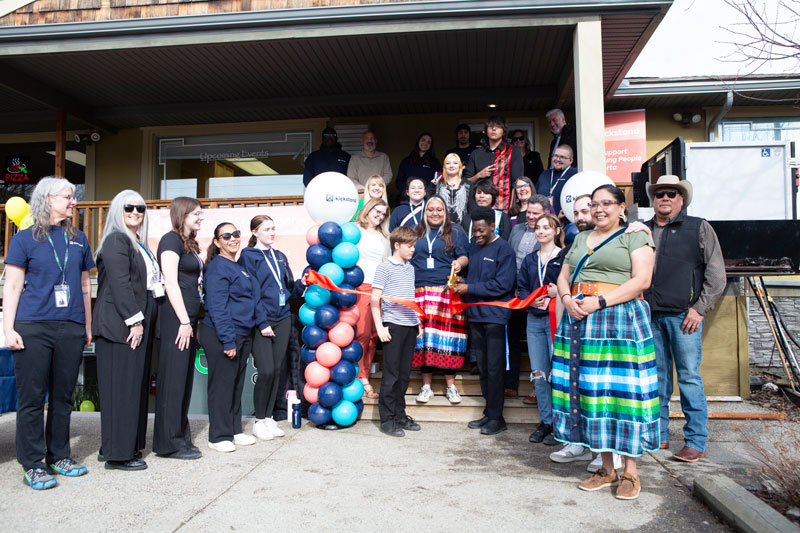
In partnership with the provincial government, the Trellis Society is helping to provide a new space for mental health and wellness support to local youth.
A grand opening was hosted, March 18, for the new space, located immediately above the Trellis offices on 2 Ave in Strathmore.
“Kickstand is a partnership between the provincial government, local philanthropists, and Trellis Society, and we have come together to make sure that young people have a place to go if they are in need of any support,” said Jeff Dyer, Trellis Society CEO. “We put a bunch of funding in place, we put a leader in place, and we just ask young people, ‘what do you need? What should this place look like?’ So, the Youth Advisory Council has guided which members of this mental health community would be on site.”
Dyer explained Kickstand is a project which is unable to take place unless there is significant involvement from local youth – asking the target demographic directly how best to support them.
Those now involved in Kickstand are not Trellis employees. Trellis’ involvement is largely to create the space to allow for youth in the community to flourish.
The facility, now that it is open to youth and young adults in the community, directly supports those who are between the ages of 11 and 25.
“These have been rolling out across the province for a few years. This particular project came about almost a year ago, gathering funding, making sure the space was available, making sure that the community wanted it, and what Kickstand could provide,” said Dyer. “I think these first six months are going to be really important – are we giving the young people what they really need and are they happy with it? And if not, how do we adjust it? Then longer term, what other communities are in need of this, and can we play a role in bringing them across the province?”
Dyer is anticipating recurring, permanent funding from the province either on an annual basis, or for multi-year agreements.
Youth and young adults are targeted for Kickstand services specifically, as there are numerous other avenues for older demographics to receive mental health services.
“There are functional needs that we anticipate, and so we want to make sure we have got experts that are in those areas. As the community suggests we need different things, they won’t talk like that, they are going to show up needing different things and then we can adapt,” added Dyer.
Supports include those for addictions, employment, community and education on site. Dyer emphasized that the service is not treatment, which must be accessed at the appropriate facilities, however, Kickstand can help people get connected with where they need to go, as well as provide community and a place to feel safe.
For young people who are a part of the Siksika community living off reserve, Kickstand is also geared to be culturally appropriate in its support systems and reflective of their specific needs.
“This in some ways is like grassroots truth and reconciliation,” said Dyer. “It is an acknowledgement that not everybody is doing okay so let’s move forward in a way that is really good, both on and off reserve.”