
Strathmore’s railway roots take centre stage at The Vault
By Melissa Crispin-Piche Local Journalism Initiative Reporter
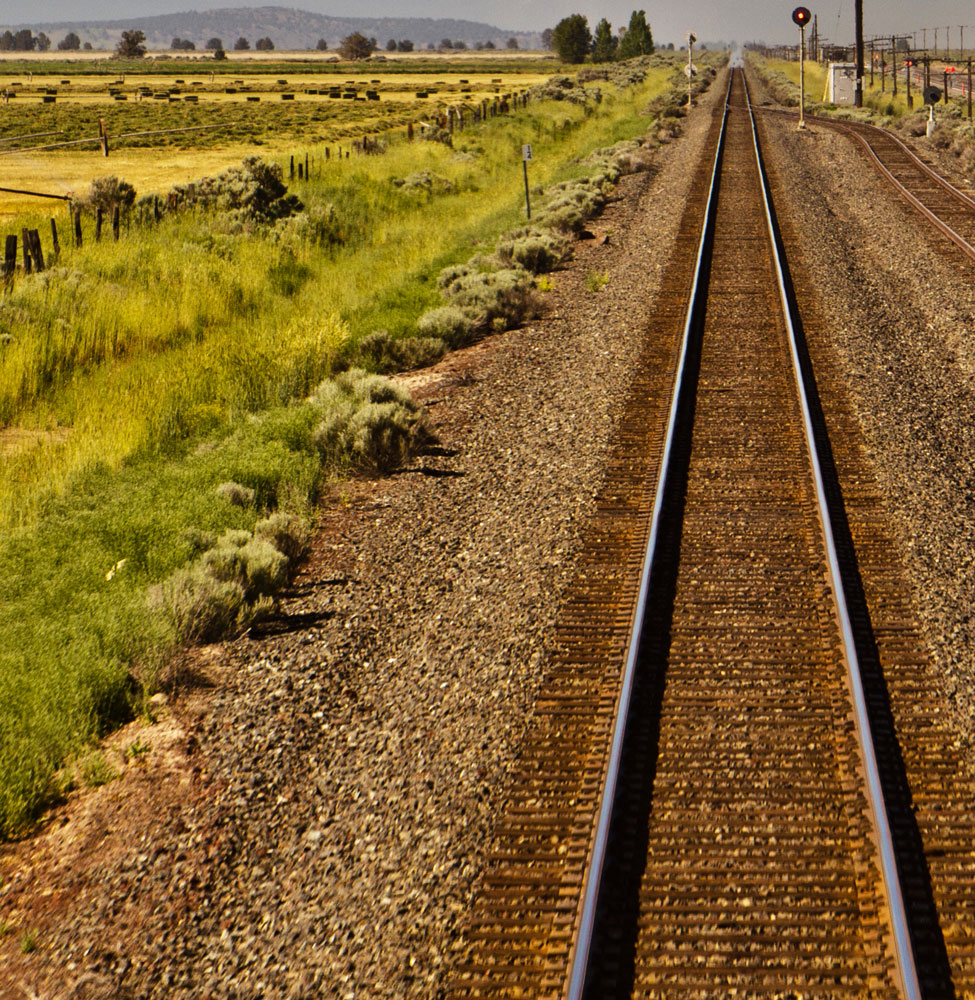
Strathmore might look very different today if the Canadian Pacific Railway had taken another route across Western Canada.
That history and the railway, irrigation projects and demonstration farm that helped put Strathmore on the map — will be the focus of an upcoming presentation at The Vault Cultural Collective.
The Western District Historical Society will welcome long time Strathmore resident and local businessman Bruce Klaiber for Strathmore: In the Beginning on Oct. 2 at 7 p.m. upstairs at The Vault.
Klaiber has spent years researching the Canadian Pacific Railway (CPR), the development of irrigation in the region and the CPR Demonstration and Supply Farm in Strathmore. His connection to the latter is also personal.
“My family purchased the CPR’s demonstration farm, part in 1944, and the other part in 1946,” he said. “I grew up in Strathmore.”
Klaiber’s deeper dive into the property’s history began after he joined the Western District Historical Society roughly 14 years ago. As members discussed the pieces of Strathmore’s past they believed were worth researching and preserving, the demonstration farm was an obvious subject for him to pursue.
What he found went well beyond the history of one property.
“I knew a bit about the farm, but I would spend some time doing some research on it,” he said. “I was completely blown away by the importance of the farm, the importance of the irrigation district.”
His Oct. 2 presentation will trace the railway’s journey west from Winnipeg, the establishment of irrigation and the role of the CPR’s demonstration farm.
It will also look at how those developments influenced where communities grew across the Prairies.
For Klaiber, understanding that history helps explain why Strathmore exists where it does today.
“It was because of the railroad, because of the irrigation district, because of the demonstration farm, that Strathmore came into being, its current location,” he said.
The route itself was not a foregone conclusion. Klaiber said the line through southern Alberta was not the original route being considered for the railway, meaning the story of Strathmore, and potentially the development that followed the rail corridor, could have unfolded differently.
That connection between the railway and later transportation routes is one of the pieces of history that particularly caught his attention during his research.
“Eventually, the Trans-Canada Highway followed the rail line as well, across the Prairies,” he said.
Klaiber believes Strathmore’s role in that larger story deserves greater recognition.
“I think that Strathmore should recognize its important part in history,” he said.
The Western District Historical Society president Rhonda Christie-Stockwell said Klaiber was a natural choice for the presentation because of the research he has already done and the talks he has given throughout the community.
Christie-Stockwell will also take part in the evening highlighting another way the society is working to make Strathmore’s history accessible.
The society has developed three walking tours that can be followed through an app called On This Spot and can be found through the Apple App store. Printed booklets will be also available for those who would rather leave their phones behind. Christie-Stockwell has been updating the modern day photographs used in the tours so residents can compare historic locations with what stands there now.
Preserving those stories has become increasingly important as the physical reminders of Strathmore’s past disappear.
“Over the years, a lot of the old buildings have been torn down, and with no regard to trying to maintain them,” Christie-Stockwell said. “So I think history is very important, and we want to keep it alive for the generations to be able to learn about it.”
Christie-Stockwell said the historical society is currently having a documentary produced that will tell more of the community’s story and include interviews with local families. The intention is eventually to bring that project into area schools.
Christie-Stockwell said even people who have lived in the area for decades can be surprised by how much history was sitting just outside their door.
Klaiber has had a similar experience through his research, particularly as he discovered stories that risk being lost as generations pass.
He said he wishes some of the work had begun earlier when more of the people who had firsthand experience with the demonstration farm and irrigation district were still available to tell their stories.
“I think that this effort should have taken place perhaps a generation before me,” Klaiber said. “There were so many people alive and living that had worked at the farm and with the irrigation district.”
The Vault’s upstairs space holds approximately 50 people. Christie-Stockwell said the society plans to gauge interest following the presentation and may hold a larger version at the Strathmore Legion in the spring. Another presentation is also planned through Wheatland Family and Community Support Services in November.
For those attending Oct. 2, Christie-Stockwell said the goal is simple; give residents a better understanding of the forces that created the community around them.
“Just getting the knowledge of how Strathmore came to be, and how important it was to the area,” she said.
Admission to Strathmore: In the Beginning is free. Tickets are available in person at The Vault Cultural Collective and online.